
Rx12% OFF

₹23₹26
View DetailsLoading...
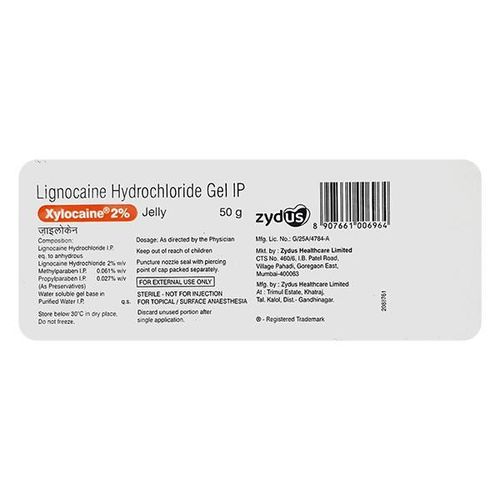
by Zydus Healthcare Ltd· 50GM
SKU: 887532
You save ₹12 on this order
Inclusive of all taxes
XYLOCAINE 2% Jelly is a topical anesthetic used for pain relief during medical
procedures. It is a powerful local anesthetic gel that provides fast and
effective pain relief by numbing the affected area during minor surgical and
medical procedures. This pain relief Gel contains lidocaine, a trusted
ingredient used worldwide for numbing pain in small, localized areas.
Xylocaine Jelly will be applied to areas which require numbness by your doctor
or a nurse. A thin layer of the medicine will be applied on the skin regions
which require numbness, and your doctor will wait until the numbness happens
before beginning the surgery or medical procedures.
Before using Xylocaine 2% Jelly inform your doctor if you have any liver,
kidney, or heart problems. You must also inform your doctor if you have any
infections or injuries at the site of application, or pregnant or breastfeeding
as a precaution. While topical medicines typically do not interact with other
medications, it is important to inform your doctor about any other medicines you
are taking as a precaution.
The most common side effects of this medicine include skin redness, skin
irritation, skin rash, skin burning, and skin itching at the site of application
or other adverse effects. These effects are generally mild and temporary. If any
side effects persist or cause concern, consult your doctor.
Xylocaine 2% Jelly contains lidocaine, a local anesthetic that numbs the skin or
mucous membranes by blocking sodium channels in nerve cells. This action
prevents pain signals from reaching the brain, providing temporary relief from
pain, itching, or discomfort. It is commonly used for localized pain management
and during minor surgical or diagnostic procedures.
Like all medicines, Xylocaine may cause certain side effects in some
individuals, although not everybody gets them.
!### Pregnancy
Consult your doctorConsult your doctor before using xylocaine jelly if you are pregnant. Your
doctor will assess whether the benefits outweigh any potential risks. Please
consult your doctor before using it.
!### Breastfeeding
Consult your doctorConsult your doctor before using xylocaine jelly if you are breastfeeding. Your
doctor will assess whether the benefits outweigh any potential risks. Please
consult your doctor before using it.
!### Driving and Using Machines
Use with CautionDo not drive or operate any heavy tools or machines if your ability is affected
by Xylocaine 2% Jelly.
!### Kidney
Use with CautionXylocaine 2% Jelly should be used with caution in patients with kidney diseases.
Therefore, consult your doctor before using it.
!### Liver
Use with CautionXylocaine 2% Jelly should be used with caution in patients with liver diseases.
Therefore, consult your doctor before using it.
!### Allergy
ContraindicatedDo not use this medication if you are allergic to lignocaine or to any other
amide local anesthetics (Ex. bupivacaine).
!### Heart Disease
Use with CautionXylocaine 2% Jelly should be used with caution in patients with heart diseases
such as bradycardia, irregular heartbeat. Therefore, consult your doctor before
using it.
!### Use In Pediatrics
Consult your doctorXylocaine 2% Jelly can be used in children and adolescents over 2 years old with
a doctor's consultation. It is generally unsafe for use in children under 2
years old. Consult and inform your doctor before using it.
!### Use In Geriatrics
Use with CautionXylocaine 2% Jelly should be used with caution in the elderly patients. Consult
and inform your doctor before using it.
Before using Xylocaine 2% Jelly, inform your doctor if you:
Inform your physician if you are taking any of the following medicine before
using Xylocaine 2% Jelly:
1.H2 blockers (e.g.,Cimetidine):Interaction: Cimetidine, a medication used to treat heartburn and ulcers,
can inhibit the liver enzymes responsible for metabolizing lidocaine.
Effect: This can lead to higher blood levels of lidocaine, increasing the
risk of side effects like dizziness, confusion, seizures, or heart arrhythmias.
2.Beta-blockers (e.g., propranolol):Interaction: Beta-blockers can also slow the metabolism of lidocaine.
Effect: This can result in elevated levels of lidocaine in the blood,
increasing the risk of toxicity, which may include symptoms such as drowsiness,
confusion, and in severe cases, cardiac arrest.
3.Antiarrhythmic Medications (e.g., Amiodarone, Quinidine, tocainide and
mexiletine):Interaction: Lidocaine is a local anesthetic that can also have
antiarrhythmic properties. When combined with other antiarrhythmic drugs like
amiodarone, quinidine, tocainide, or mexiletine, it may lead to additive effects
on cardiac conduction. This can increase the risk of arrhythmias, particularly
when lidocaine is absorbed systemically in high amounts.
Effect: Lidocaine may increase the risk of toxicity when combined with other
antiarrhythmics, leading to CNS effects like dizziness, confusion, or seizures,
and cardiovascular issues like heart block.
3.Anti-seizure Medications (e.g., Phenytoin):Interaction: Phenytoin, an anti-seizure drug, can either enhance or reduce
the effects of lidocaine, depending on the concentration of both drugs in the
bloodstream.
Effect: An enhanced effect may increase the risk of lidocaine toxicity,
while a reduced effect could make lidocaine less effective as an anesthetic.
4.Anticoagulants (e.g., warfarin):Interaction: Lidocaine may increase the anticoagulant effect of warfarin,
potentially leading to excessive bleeding.
Effect: Increased bleeding risk due to a combination of lidocaine affecting
platelet aggregation and warfarin’s blood-thinning action.
5.Other local anesthetics:
Interaction: Using lidocaine gel in conjunction with other local anesthetics
can lead to an additive effect on the nervous system.
Effect: This can increase the risk of systemic toxicity, including symptoms
like dizziness, tingling, and, in severe cases, respiratory depression or
cardiac arrhythmias.
| Drug | : | Lignocaine |
| Pharmacological Category | : | Amide Local Anesthetics |
| Therapeutic Indication | : | Local anesthesia |
| Dosage Forms | : | Injection, Gel, Cream, Ointment, Jelly, Topical Solution, Spray, Oral solution, Plaster |
Xylocaine 2% Jelly is a trusted local anesthetic that offers numerous advantages
compared to other anesthetics. Whether you are seeking pain relief for medical
procedures or certain discomforts, Xylocaine 2% Jelly is a preferred choice for
both healthcare professionals and patients.
Xylocaine 2% Jelly starts working almost immediately after application,
providing rapid relief from pain or discomfort. This makes it an ideal choice
for procedures that require quick anesthesia.
With a 2% concentration of lidocaine, Xylocaine 2% Jelly provides effective and
consistent numbing, allowing for smoother, more comfortable medical procedures.
It is widely used in various settings, including dental work, urology, and minor
surgeries.
Unlike other forms of anesthetics, Xylocaine 2% Jelly has a smooth,
easy-to-apply consistency that does not irritate the skin or mucous membranes.
This ensures a more comfortable experience for the patient.
Xylocaine 2% Jelly is highly versatile and can be used for a variety of
procedures, such as skin surgeries, endoscopic procedures, and more. Its broad
range of applications makes it a go-to anesthetic for healthcare providers.
Xylocaine 2% Jelly has a long-standing reputation for safety and tolerance. It
is less likely to cause allergic reactions compared to other anesthetics, making
it a reliable o
Doctors, dentists, and medical professionals trust Xylocaine 2% Jelly for its
effectiveness and reliability. Its proven track record makes it the first choice
in many medical environments.
The anesthetic effect of Xylocaine 2% Jelly lasts for a sufficient amount of
time to complete most medical procedures, reducing the need for reapplication.
Xylocaine 2% Jelly is well-known for having fewer side effects compared to other
anesthetics. When used properly, it offers a safe and effective way to manage
pain.
When it comes to choosing an anesthetic for pain relief during medical
procedures, Xylocaine 2% Jelly stands out due to its fast action, effectiveness,
and safety profile. Trusted by medical professionals, this versatile and
easy-to-use product provides an o
healthcare providers. Choose Xylocaine 2% Jelly for a reliable solution to your
anesthetic needs.
“I have used Xylocaine 2% Jelly multiple times, and it’s been a lifesaver! I
needed it for a minor procedure at the dermatologist’s office, and it numbed the
area almost immediately. The application is easy and the gel consistency makes
it perfect for targeted areas. Highly recommend for anyone looking for quick,
effective numbing!”.
“I have been using Xylocaine 2% Jelly before a few medical exams that involve
minor discomfort, and it works perfectly. It is quick-acting, and I feel no pain
at all during the procedure. No side effects so far, and it is very easy to
apply. I feel a lot more comfortable with it during my visits to the clinic.”
“I got this Xylocaine jelly to use on a skin wound I had, and it really helped.
I applied it directly, and within minutes the area was numb. It is a bit of a
life-saver if you are dealing with any minor injuries or skin irritation. Just a
heads-up – you will want to make sure you follow the directions carefully.”
“I usually get anxious before my dentist appointments, but Xylocaine 2% Jelly
has made all the difference. The numbing kicks in so quickly, and it helps me
get through any procedures pain-free. I have recommended it to my friends who
struggle with dental work – it has been a game-changer!”.
“As a healthcare worker, I often have to deal with skin irritation from constant
hand washing. Xylocaine 2% Jelly has been a great way to numb the discomfort.
It’s easy to apply, dries quickly, and lasts just the right amount of time.
Great for everyday use if you need quick numbing!”.
6.Reliable and Long-Lasting “Xylocaine 2% Jelly is my go-to for temporary
pain relief before certain procedures. It is reliable, easy to apply, and
provides long-lasting numbing. I have used it for small surgeries, and it is
always worked well. I trust this brand, and it has always been safe and
effective for me.”
A: Xylocaine 2% Jelly is primarily used as a local anesthetic to numb tissues in
a specific area. It is commonly applied as a lubricant to facilitate the
insertion of medical instruments, such as catheters, and to alleviate pain
associated with conditions like hemorrhoids, anal fissures, and mouth ulcers.
A: Xylocaine 2% Jelly is generally safe for most individuals when used as
directed. However, it is not suitable for everyone. Please consult your doctor
for more information before using it.
A: Some common side effects include application site reactions such as burning,
irritation, itching, and redness. These effects are usually mild and temporary.
If they persist or cause concern, consult your doctor.
A:Clean and dry the affected area. Wash your hands before and after application.
Squeeze a small amount of jelly onto a clean finger or applicator. Spread it
evenly over the desired area. Allow the jelly to absorb for a few minutes before
any procedure or contact with the area. Please consult your doctor before using
it.
A: The dosage for local anesthesia varies based on the procedure and area being
managed: For Adults: Typically, 3-5g is sufficient for localized numbness, For
Children: Use only as prescribed by a doctor. Dosage is determined by body
weight (not exceeding 4.5 mg/kg) and Maximum Dosage: The total dose should not
exceed 20g in a 24-hour period to avoid toxicity. Do not exceed the recommended
dose, and ensure that the jelly is not ingested or applied to broken skin unless
directed by a doctor.
A: Yes, Xylocaine 2% Jelly can sometimes cause skin irritation or allergic
reactions in some people. If you experience redness, itching, swelling, or other
unusual symptoms, stop using it and consult your doctor.
A: Xylocaine 2% Jelly is generally considered safe during pregnancy when used as
directed by your doctor. However, it is important to consult your doctor before
using any medication during pregnancy to ensure it is appropriate for your
specific situation. They will evaluate the potential risks and benefits based on
your health condition.
A: Xylocaine 2% Jelly should not be used by people who are allergic to lidocaine
or any other ingredients in the jelly. It is also not recommended for people
with certain heart conditions, such as severe heart block, or those who have a
known sensitivity to local anesthetics.
A: Xylocaine 2% Jelly typically starts to numb the area within 2 to 5 minutes
after application. However, full effects can take up to 20 minutes for maximum
numbness. Consult your doctor for more information.
A: Yes, Xylocaine 2% Jelly can be used to numb the skin or mucous membranes
before certain medical procedures, including needle injections. It works as a
local anesthetic, reducing pain and discomfort during the injection. However,
always consult your doctor to ensure it is appropriate for your specific
situation.
A: Yes, Xylocaine 2% Jelly may interact with certain medications, including
other local anesthetics and anti-arrhythmic drugs like mexiletine and
amiodarone. It's crucial to inform your doctor about all medications and
supplements you're currently taking to avoid potential interactions.
A: Inform your doctor if you have any allergies to lidocaine or other local
anesthetics, liver or kidney diseases, heart conditions, or a history of
seizures. Additionally, avoid eating or drinking immediately after application
in the mouth or throat area to reduce accidental biting or swallowing
difficulties due to numbness. Consult your doctor before using it.


