
Rx11% OFF

₹53₹59.43
View DetailsLoading...
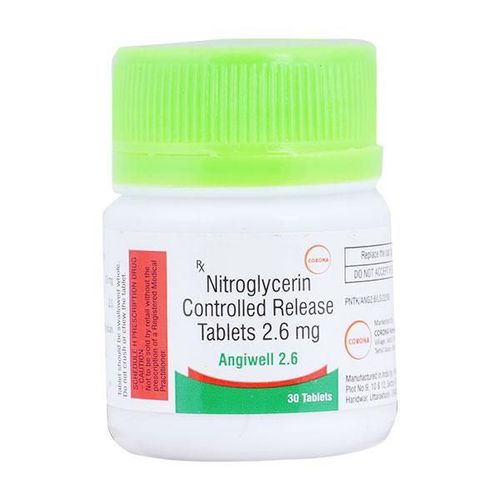
by Penta Kraft· 30S
SKU: 804668
You save ₹30 on this order
Inclusive of all taxes
ANGIWELL 2.6MG TABLET contains Nitroglycerine that belongs to the group of
medicines called Vasodilators. It is used for management of angina pectoris due
to coronary artery disease.
Angina is a type of chest pain which is caused by reduced blood flow to the
heart as a result of coronary artery disease. Symptoms are feeling pressure,
squeezing, heaviness, tightness or pain in the chest or a heavy weight is lying
on the chest.
Along with ANGIWELL 2.6MG TABLET your doctor may advise you to make certain
lifestyle changes such as quitting alcohol and smoking, eating a healthy diet,
manage weight and to improve your sleep pattern.
ANGIWELL 2.6MG TABLET is not recommended for use in patients having heart
diseases (hypertrophic obstructive cardiomyopathy), anaemia, raised pressure in
head, raised pressure in the eye (glaucoma), or are taking medicines to manage
erectile dysfunction (sildenafil, vardenafil, tadalafil.
ANGIWELL 2.6MG TABLET should be used with caution in patients having liver or
kidney diseases, underactive thyroid gland, low body temperature,
malnourishment, abnormally low levels of oxygen in blood, very low blood
pressure, low blood volume, disease of the blood vessels supplying the brain, or
conditions that lower blood volume in the heart.
ANGIWELL 2.6MG TABLET should be used with caution in pregnant and breast-feeding
women. Take your doctor’s advice before taking the medicine. ANGIWELL 2.6MG
TABLET is not recommended for use in children. ANGIWELL 2.6MG TABLET should be
used with caution in elderly patients.
The most common side effects of taking ANGIWELL 2.6MG TABLET are throbbing
headache, spinning sensation, dizziness, drowsiness, lack of energy. Consult
your doctor if the symptoms worsen or doesn’t improve.
ANGIWELL 2.6MG TABLET causes relaxation of smooth muscles within blood vessels
which leads to relaxation and widening of blood vessels. This improves blood
supply to the heart muscles. As a result, it helps to relieve chest pain and
blood pressure.
Always use ANGIWELL 2.6MG TABLET exactly as prescribed by your doctor.
For Tablet, Capsule: Swallow ANGIWELL 2.6MG TABLET with a glass of water. Do
not crush or chew the medicine.
For Sublingual Tablet: Place ANGIWELL 2.6MG TABLET inside your mouth, below
the tongue and allow it to dissolve completely. Do not swallow or chew the
medicine.
Your doctor will decide the correct dose and duration of therapy for you
depending upon your age, body weight and severity of disease condition. Continue
to take ANGIWELL 2.6MG TABLET for the stipulated duration prescribed by your
doctor to achieve better results.
Stop taking ANGIWELL 2.6MG TABLET and contact your doctor immediately if you
experience any of the following side effects:
Nausea:
Take this medicine with or after meals. Stick to simple meals while taking this
medicine. Avoid eating rich or spicy food. Do not consume any medication by
yourself. Take your doctor’s advice if nausea doesn’t improve or worsen.
Headache:
Try to take rest and do not involve yourself in exertive activities. Rest in a
quiet and dark room. Apply a pain-relieving balm on your forehead. Take your
doctor’s advice if headache doesn’t improve.
Vomiting:
Drink clear or ice-cold drinks. Eat bland, light foods and avoid fried, oily, or
sweet foods. Avoid carbonated drinks. Take your doctor’s advice if vomiting
doesn’t improve.
Dizziness:
Lie, or sit down immediately when you feel dizzy. If you're feeling severe
episode of spinning(vertigo), lie in a dark and quite place with eyes closed.
Try to avoid vehicle driving. Take your doctor’s advice if dizziness doesn’t
improve.
Drowsiness:
Take adequate sleep. Do not involve in rigorous activities. Do not interfere
with your sleep cycle. Talk to your doctor if the drowsiness doesn’t improve.
!### Pregnancy
ANGIWELL 2.6MG TABLET should be used with caution in pregnant women. Consult
your doctor before taking ANGIWELL 2.6MG TABLET.
!### Breastfeeding
ANGIWELL 2.6MG TABLET should be used with caution in breastfeeding women.
Consult your doctor before taking ANGIWELL 2.6MG TABLET.
!### Driving and Using Machines
Do not drive or operate any machines if you feel dizzy after taking ANGIWELL
2.6MG TABLET.
!### Alcohol
Avoid consum
it may increase some effects of the medicine.
!### Kidney
ANGIWELL 2.6MG TABLET should be taken with caution in patients with severe
kidney disease. Consult your doctor before taking it.
!### Liver
ANGIWELL 2.6MG TABLET should be used with caution in patients with severe liver
disease. Consult your doctor before taking it.
!### Allergy
Do not take ANGIWELL 2.6MG TABLET if you are allergic to Nitroglycerine or any
other components of this medicine.
!### Heart Disease
ANGIWELL 2.6MG TABLET is not recommended for use in patients having heart
diseases such as hypertrophic obstructive cardiomyopathy (thickening of heart
muscles). ANGIWELL 2.6MG TABLET should be used with caution in patients having
other heart diseases such as have had a recent heart attack, narrowing of heart
valves, inflammation of heart, heart failure or fluid build-up around the heart.
Consult your doctor before taking ANGIWELL 2.6MG TABLET.
ANGIWELL 2.6MG TABLET is not recommended for use if you:
Before taking ANGIWELL 2.6MG TABLET inform your doctor if you have:
Use in paediatrics:
ANGIWELL 2.6MG TABLET is not recommended for use in children. Ask for the advice
of your child’s doctor before giving it to your child.
Use in geriatrics:
ANGIWELL 2.6MG TABLET should be used with caution in elderly patients. Ask for
your doctor’s advice before taking the medicine.
A. Drug-Drug interactions:
Before taking ANGIWELL 2.6MG TABLET, inform your doctor if you are taking any of
the following medicine:
Overdosage:
If you or anyone else uses too much of ANGIWELL 2.6MG TABLET, consult your
doctor immediately or visit the nearby hospital. Symptoms of overdosage of
ANGIWELL 2.6MG TABLET may include nausea, low blood pressure, restlessness,
fainting, blue coloration of the skin, methaemoglobin in the blood, breathing
difficulties, lack of oxygen in tissues, slow heartbeat or mental illness.
| Drug | : | Nitroglycerin (Glyceryl trinitrate) |
| Pharmacological Category | : | Vasodilators |
| Therapeutic Indication | : | Angina pectoris |
| Dosage Forms | : | Tablet, Capsule, Sublingual Tablet, Injection, Patch, Spray |
Q: Why is ANGIWELL 2.6MG TABLET prescribed?
A: ANGIWELL 2.6MG TABLET is used for management of angina pectoris due to
coronary artery disease. Angina is a type of chest pain which is caused by
reduced blood flow to the heart as a result of coronary artery disease. Symptoms
are feeling pressure, squeezing, heaviness, tightness or pain in the chest or a
heavy weight is lying on the chest.
Q: Can ANGIWELL 2.6MG TABLET be used in elderly patients?
A: ANGIWELL 2.6MG TABLET should be used with caution in elderly patients. Take
the medicines sat down to reduce possible low blood pressure or fainting. Your
doctor may change the dose to suit your condition. If you notice that ANGIWELL
2.6MG TABLET is not working as well at relieving pain as they have done, contact
your doctor.
Q: How to useANGIWELL 2.6MG TABLET?
A: Always use ANGIWELL 2.6MG TABLET exactly as prescribed by your doctor.
For Tablet, Capsule: Swallow ANGIWELL 2.6MG TABLET with a glass of water. Do
not crush or chew the medicine.
For Sublingual Tablet: Place ANGIWELL 2.6MG TABLET inside your mouth, below
the tongue and allow it to dissolve completely. Do not swallow or chew the
medicine.
Your doctor will decide the correct dose and duration of therapy for you
depending upon your age, body weight and severity of disease condition. Continue
to take ANGIWELL 2.6MG TABLET for the stipulated duration prescribed by your
doctor to achieve better results.
Q: Can ANGIWELL 2.6MG TABLET cause headache?
A: Yes. ANGIWELL 2.6MG TABLET can cause throbbing headache. If it happens, try
to take rest and do not involve yourself in exertive activities. Rest in a quiet
and dark room. Apply a pain-relieving balm on your forehead. Do not consume any
medication without consulting a doctor. Take your doctor’s advice if headache
doesn’t improve.
Q:Is it safe to consume alcohol while being managed with ANGIWELL 2.6MG
TABLET?
A: You are advised not to drink alcohol with ANGIWELL 2.6MG TABLET, as some of
the effects of this medicine are increased such as dizziness. If you have a
habit of drinking alcohol, take your doctor’s advice before taking ANGIWELL
2.6MG TABLET.
Q: Can ANGIWELL 2.6MG TABLET affect my ability to drive?
A: As ANGIWELL 2.6MG TABLET can cause dizziness, you should make sure you are
not affected before driving or operating machinery, especially if taken with
alcohol. Do not drive or operate any machines if you feel dizzy after taking
ANGIWELL 2.6MG TABLET. You can resume doing your activities after you feel
normal again.


