
Rx21% OFF

₹46₹58.03
View DetailsLoading...
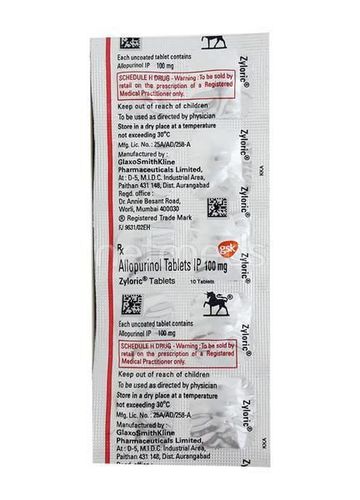
by Glaxosmithkline Pharmaceuticals Ltd· 10S
SKU: 42134
You save ₹3 on this order
Inclusive of all taxes
Zyloric 100mg tablet is an effective management for lowering uric acid levels in
the body and reducing gout flare-ups and kidney stones. It is commonly
prescribed to individuals with hyperuricemia (high uric acid levels).
Zyloric 100mg tablet should be taken after meals. Continue taking the medication
as prescribed by your doctor, even when you are not experiencing a gout attack.
Stopping the medication could worsen your symptoms, as it may lead to more
crystals forming in your joints and kidneys. Additionally, you can support your
management by making dietary changes and staying well-hydrated.
Common side effect of this medication includes nausea, dizziness, stomach pain,
diarrhea, increased serum glutamic oxaloacetic transaminase, serum glutamate
pyruvate transaminase, and increased alkaline phosphatase. Your doctor can
assist in finding ways to reduce these symptoms. In some cases, a severe
allergic reaction may occur, requiring immediate medical attention. Contact your
doctor immediately if you experience symptoms of liver disease, such as
persistent nausea, yellowing of the skin or eyes, or dark urine.
To ensure this medicine is safe for you, inform your doctor if you have or have
had heart failure, heart issues, stroke, kidney or liver disease, or thyroid
problems. Do not take this medicine if you are pregnant or breastfeeding.
Regular blood tests will be required to monitor your liver function.
01)Manage and reduce gout attacks: Zyloric is primarily used to manage gout,
a form of arthritis caused by the buildup of uric acid crystals in the joints.
Allopurinol (the active ingredient) helps reduce gout attacks by reducing the
production of uric acid, which is responsible for the painful symptoms.
02)Reduces uric acid levels in the blood: Allopurinol works by inhibiting
the enzyme xanthine oxidase, which plays a key role in producing uric acid. By
lowering the levels of uric acid in the blood, it reduces the risk of uric acid
crystals forming in the joints or kidneys, which can lead to gout attacks and
kidney stones.
03)Helps reduce kidney stone formation: High levels of uric acid can lead to
the formation of kidney stones. Zyloric helps in reducing these stones by
controlling uric acid levels, especially in individuals prone to uric acid-based
kidney stones. By reducing crystal formation, it can reduce the likelihood of
kidney stone development.
04)Available in a convenient 100mg dosage form: The 100mg dosage of Zyloric
is commonly prescribed, providing a convenient and controlled method of managing
uric acid levels. The tablet form allows for easy dosing, which is important for
consistent management in conditions like gout or hyperuricemia.
Zyloric 100mg tablet contains allopurinol, which works by inhibiting the enzyme
xanthine oxidase, responsible for converting purines into uric acid. By reducing
the production of uric acid, Zyloric lowers its levels in the blood, helping to
reduce the formation of uric acid crystals in the joints (which cause gout) and
in the kidneys (which can lead to kidney stones). This helps reduce the
frequency of gout attacks and lowers the risk of developing kidney stones,
making it an effective management for hyperuricemia (high uric acid levels)
associated with gout and other conditions.
Follow your doctor's instructions regarding the exact dosage. Do not exceed the
recommended daily dosage. It is important to follow the prescribed dosage for
o
feel the medication is not working or experience side effects, consult your
doctor immediately.
Like all medicines, Zyloric 100mg tablet may cause certain side effects in some
individuals, although not everybody gets them.
!### Diarrhea
!### Nausea And Vomiting
!### Pregnancy
ContraindicatedZyloric 100mg tablet is not recommended for use during pregnancy. Although there
are limited studies in humans,
developing baby. It is important to consult your doctor before taking this
medication.
!### Breastfeeding
ContraindicatedZyloric 100mg tablet is not recommended for use during breastfeeding. Data
suggests that the drug may pass into the breastmilk and harm the baby. It is
important to consult your doctor before taking this medication.
!### Driving and Using Machines
Use with CautionDo not drive or operate machines if you experience drowsiness, giddiness, or
problems with co-ordination after taking it.
!### Alcohol
Consult your doctorAvoid consum
uric acid levels.
!### Kidney
Use with CautionZyloric 100mg tablet should be used with caution in patients with kidney
problems. Please consult your doctor before taking it.
!### Liver
Use with CautionZyloric 100mg tablet should be used with caution in patients with liver
problems. Please consult your doctor before taking it.
!### Allergy
ContraindicatedDo not take this medication if you are allergic to allopurinol or any other
ingredients of this medicine.
!### Heart Disease
Use with CautionZyloric 100mg tablet should be used with caution in patients with heart
problems. Please consult your doctor before taking it.
!### Use In Pediatrics
Consult your doctorZyloric 100mg tablet is not recommended for use in children and adolescents
below 15 years of age except in some types of cancer (leukaemia) and certain
enzyme disorders such as Lesch-Nyhan syndrome. Consult with your pediatrician
before giving it to your child.
Use with CautionZyloric 100mg tablet should be used with caution in elderly patients (aged 65
years and above). Please consult your doctor before taking it.
Before taking Zyloric 100mg tablet inform your doctor if you:
| Category | Recommendation | Explanation |
| Medications | Continue Zyloric (Allopurinol) 100mg as prescribed. | Allopurinol helps to lower uric acid levels, which are a primary cause of gout. Follow your doctor’s advice regarding dosage. |
| Hydration | Drink plenty of water (8-12 cups/day). | Helps to flush out uric acid from the body and prevent crystal formation in joints. |
| Alcohol | Limit or avoid alcohol, especially beer and spirits. | Alcohol can increase uric acid production and hinder its elimination. Opt for moderate wine consum |
| Purine-Rich Foods | Avoid high-purine foods (e.g., red meat, organ meats, shellfish). | Purines are broken down into uric acid, increasing the risk of gout flare-ups. |
| Low-Purine Alternatives | Opt for lean meats, poultry, and plant-based protein (e.g., tofu, legumes). | These have lower purine content, which helps maintain safe uric acid levels. |
| Dairy Products | Include low-fat or fat-free dairy (milk, yogurt, cheese). | Dairy products may help lower uric acid levels and reduce the frequency of gout attacks. |
| Fruits and Vegetables | Consume plenty of low-purine vegetables (e.g., leafy greens, bell peppers). | These are nutrient-rich, help manage inflammation, and do not contribute to high uric acid levels. |
| Whole Grains | Prefer whole grains (e.g., brown rice, quinoa, whole-wheat bread). | Whole grains are low in purines and provide fiber, which can help reduce the risk of gout flare-ups. |
| Vitamin C | Increase intake of vitamin C-rich foods (e.g., citrus fruits, bell peppers). | Vitamin C may help lower uric acid levels. Aim for 500mg of Vitamin C daily, through foods or supplements. |
| Omega-3 Fatty Acids | Include sources of omega-3s (e.g., flaxseeds, walnuts, fishlike salmon). | Omega-3s may help reduce inflammation in the joints and improve overall joint health. |
| Avoid Fructose | Minimize sugary foods, sodas, and high-fructose corn syrup. | High fructose levels can elevate uric acid levels and contribute to gout flare-ups. |
| Weight Management | Maintain a healthy weight. | Obesity is a risk factor for gout, as it can increase uric acid production. Focus on balanced eating and exercise to maintain weight. |
| Exercise | Engage in low-impact exercises like walking, swimming, or cycling. | Regular physical activity can help manage weight, reduce inflammation, and improve joint mobility. |
| Stress Management | Practice relaxation techniques (e.g., meditation, yoga, deep breathing). | Stress can exacerbate gout attacks, so finding ways to manage stress is important for overall health. |
| Joint Care | Avoid prolonged periods of joint strain. | Give your affected joints rest when possible and elevate them to reduce swelling. Consider using ice packs to alleviate pain. |
Inform your physician if you are taking any of the following medicine before
taking Zyloric 100mg tablet:
| Drug | : | Allopurinol |
| Pharmacological Category | : | Xanthine Oxidase Inhibitor |
| Therapeutic Indication | : | Gout, Hyperuricemia |
| Dosage Forms | : | Tablet, Capsule |
Zyloric (with the active ingredient Allopurinol) is a medication commonly
prescribed to control high levels of uric acid in the blood, which can lead to
conditions like gout and kidney stones. Here’s why Zyloric might be
preferred over other medications:
| Aspect | Zyloric (Allopurinol) | Febuxostat |
| Mech | ||
| Efficacy | Effective in reducing uric acid levels | More effective in patients with renal impairment or those who fail on Allopurinol |
| Dosage Form | Available as oral tablets (100 mg, 300 mg) | Available as oral tablets (40 mg, 80 mg) |
| Side Effects | Rash, liver enzyme abnormalities, gastrointestinal issues | Nausea, liver enzyme abnormalities, cardiovascular risks |
| Renal Function | Requires dose adjustment in renal impairment | Preferred for patients with moderate renal impairment due to minimal dose adjustments |
| Cost | Generally cheaper and widely available | More expensive than Allopurinol |
| Long-term Use | Well-established for long-term management of gout | Newer drug with growing evidence for long-term use |
| Risk of Hypersensitivity | Higher risk of severe hypersensitivity reactions (e.g., SJS) | Lower risk of hypersensitivity compared to Allopurinol |
| Indications | First-line treatment for most gout cases | Typically used when Allopurinol is not effective or causes side effects |
| Drug Interactions | Many potential drug interactions (e.g., with warfarin) | Fewer drug interactions compared to Allopurinol |
| Effect on Serum Uric Acid | Lowers uric acid by 20-30% | Lowers uric acid more effectively, especially in severe cases |
| Approved for Use | Approved for chronic gout treatment and hyperuricemia | Approved for chronic gout and hyperuricemia, especially in cases of intolerance to Allopurinol |
Conclusion:
Zyloric (Allopurinol) is often preferred as a first-line management due to its
longer history of use, lower cost, and broad effectiveness. It works well for
most patients and is generally safer for long-term use. However, Febuxostat may
be considered better for those who cannot tolerate Allopurinol or have renal
impairment, as it requires fewer dose adjustments. It can also be more effective
in lowering serum uric acid levels for certain patients, but its higher cost and
potential cardiovascular risks may limit its use.
| Feature | Zyloric (Allopurinol) | Colcrys (Colchicine) |
| Mech | ||
| Indication | Primarily used for chronic gout and hyperuricemia management. | Primarily used for acute gout flare management. |
| Role in Treatment | Long-term management, helps prevent gout attacks by lowering uric acid levels. | Acute symptom relief during flare-ups; does not address uric acid production. |
| Duration of Use | Taken long-term for uric acid control. | Taken short-term (during acute attacks). |
| Effectiveness for Gout | Prevents recurrent gout attacks by lowering uric acid levels over time. | Effective in reducing symptoms of an active gout flare but does not lower uric acid levels. |
| Side Effects | Possible skin rash, liver issues, nausea, headache, allergic reactions. | Gastrointestinal issues (diarrhea, nausea), muscle pain, potential toxicity at high doses. |
| Risk of Kidney Stones | Can increase risk of kidney stones, but can be managed by adequate hydration. | No significant risk of kidney stones. |
| Dosing | Once daily for maintenance (may vary based on individual uric acid levels). | Multiple doses per day during acute flare-ups. |
| Use in Chronic Gout | First-line therapy for chronic gout due to its ability to lower uric acid over time. | Not suitable for chronic gout management; used only for acute flares. |
| Tolerability | Generally well-tolerated when prescribed appropriately. | Can cause significant GI side effects and is not well-tolerated by all patients. |
| Cost | Typically less expensive (generic available). | Can be more expensive, especially if not generic. |
| Approval for Uric Acid Control | Approved for chronic uric acid control in gout. | No effect on uric acid levels; used only for symptom relief. |
| Factor | Zyloric 100mg (Allopurinol) | Natural Gout Remedies / Lifestyle Changes |
| Mech | ||
| Effectiveness in Lowering Uric Acid | Highly effective in lowering uric acid levels in the blood. | Limited effect, depends on individual remedies. No direct mech |
| Speed of Action | Works within days to weeks, depending on dosage and individual response. | Effects are gradual, often requiring weeks or months to see any improvement. |
| Preventative Ability | Prevents future gout attacks by lowering uric acid levels. | Can help prevent flare-ups but does not lower uric acid significantly. |
| Side Effects | Possible side effects: skin rash, liver issues, digestive disturbances, rare severe allergic reactions. | Generally safe with minimal side effects, though some remedies may interact with medications. |
| Reliability | High reliability in reducing uric acid and preventing gout attacks. | Variable results; no guarantee of consistent symptom control or prevention. |
| Lifestyle Modifications Included | Not applicable, as Zyloric is a prescri | |
| Cost | Prescri | |
| Long-Term Management | Long-term use can effectively control uric acid levels and prevent flare-ups. | Requires ongoing commitment to lifestyle changes and may not be sufficient on its own. |
| Scientific Backing | Well-researched with strong evidence supporting its efficacy. | Some remedies (e.g., cherries, vitamin C, hydration) have partial evidence, but not all are consistently supported by science. |
Conclusion:
A:Yes, Zyloric 100mg Tablet is effective in managing gout by reducing uric acid
levels in the body.
A: Zyloric contains allopurinol, which works by inhibiting the production of
uric acid, helping to lower its levels in the blood.
A: It can take a few weeks to see the full effect of Zyloric 100mg, as it works
gradually to lower uric acid levels.
A: Yes, when taken regularly, Zyloric can helps to reduce gout attacks by
lowering uric acid levels.
A: If you miss a dose, take it as soon as you remember, unless it's almost time
for your next dose. Do not double the dose.
A: Yes, Zyloric is typically taken every day to manage uric acid levels.
However, follow your doctor's recommendations.
A: Zyloric helps to reduce uric acid levels and gout attacks and minimizing
inflammation and pain associated with gout.
A: While Zyloric helps reduce uric acid over time, it may not provide immediate
pain relief during a gout flare-up.
A: Yes, Zyloric can helps to reduce the formation of uric acid kidney stones by
lowering uric acid levels in the body.
A: Yes, Zyloric is generally safe for long-term use under a doctor's
supervision, as it helps manage chronic gout.
A: Zyloric can interact with certain medications, so it's important to consult
your doctor before combining it with other managements.
A: Zyloric should be used cautiously in people with kidney problems. Your doctor
may adjust the dose based on your kidney function.
A: Zyloric is not recommended during an acute gout attack, as it may worsen the
flare-up. It is best used for long-term management.
A: Some people may experience side effects such as rash, nausea, or liver
problems. If you experience any side effects, consult your doctor.
A: It is generally advised to limit alcohol consum
alcohol can increase uric acid levels and interfere with its effectiveness.
A: No, Zyloric 100mg is a prescri
prescri
A: You will know Zyloric is working if your uric acid levels decrease and you
experience fewer gout attacks. Regular blood tests can confirm its
effectiveness.
A: Weight gain is not a common side effect of Zyloric, but if you notice any
unexpected changes in weight, consult your doctor.
A: You can buy Zyloric 100mg tablet online at medicalslot. Just visit their website
and search for the product, and you will find o
from there.


