
Rx19% OFF

₹43₹53.31
View DetailsLoading...
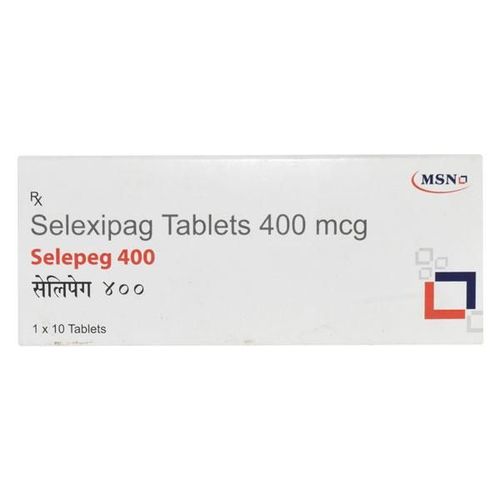
by Msn Laboratories Pvt Ltd· 10S
SKU: 1029665
You save ₹181 on this order
Inclusive of all taxes
SELEPEG 400 TABLET contains Selexipag, which belongs to the group of medicines
known as Prostacyclin Receptor Agonists. It is used for the long-term management
of Pulmonary Arterial Hypertension (PAH - a condition with increased pressure
due to the narrowing of blood vessels supplying the lungs from the heart lungs)
in adults. The symptoms of PAH may include dizziness, tiredness, shortness of
breath, swelling in the ankles and legs, chest pain, heart failure, etc.
SELEPEG 400 TABLET is not recommended for use in patients with coronary heart
disease (poor blood supply to heart muscles, unstable angina (chest pain), weak
heart (decompensated heart failure), a history of heart attack within the past 6
months, congenital or acquired heart valve disease, severe arrhythmias
(irregular heartbeat).
SELEPEG 400 TABLET should be taken with caution in patients with narrowing of
the pulmonary vein, a condition called pulmonary venous-occlusive disease,
severe liver disease, severe kidney disease, low blood pressure (hypotension)
with dizziness and hyperthyroidism.
SELEPEG 400 TABLET is generally not recommended for use by pregnant women,
breastfeeding mothers and children less than 18 years of age. SELEPEG 400 TABLET
is also not recommended for use in children under the age of 18 years. SELEPEG
400 TABLET should be used with caution in patients above 75 years of age.
The side effects of taking SELEPEG 400 TABLET may include headache, flushing
(reddening of the face), nausea, vomiting, diarrhoea, jaw pain, muscle pain,
joint pain, nasopharyngitis (stuffy nose), anaemia, weight loss, rashes, stomach
pain, hypotension (low blood pressure), hyperthyroidism, tachycardia (increased
heart rate), etc. Consult your doctor if any of the side effects get worse.
SELEPEG 400 TABLET works similarly to a natural substance present in our body
(Prostacyclin) by widening the pulmonary arteries and reducing their hardness.
Doing so makes it easier for the heart to pump blood to the lungs effectively.
It also decreases pressure in pulmonary arteries, hence reducing the symptoms of
pulmonary arterial hypertension and slowing down the progression of the disease.
The metabolite released by SELEPEG 400 TABLET has vasodilatory,
anti-proliferative and anti-fibrotic effects.
Take SELEPEG 400 TABLET as advised by your physician. Swallow the medicine with
a glass of water and do not crush or chew the medicine. Your management dose and
duration will be decided by your physician depending on your age, body weight
and disease condition.
Headache:
Rest and relax. Apply a pain-relieving balm to your forehead if needed. Contact
your doctor if the headache persists.
Nausea, vomiting:
Take the medicine, with or just after a meal. Stick to simple meals. Avoid
eating oily or spicy foods. Contact your doctor if your symptom gets worse or
persist.
Stomach pain:
Try to rest and relax. Eat small meals but take them frequently. Keep a heating
pad on your stomach. Contact your doctor if your symptom gets worse or persist.
Diarrhoea:
Drink plenty of water or fruit juice to keep you hydrated. Do not take any
medication on your own to manage diarrhoea. Contact your doctor if your symptom
gets worse or persist.
Itchy skin:
Avoid hot showers because hot water can irritate the skin. Do not scratch the
affected area. Use sunscreen and protective clothing when outdoors. Use
moisturizers to soothe and hydrate the affected skin area. Contact your doctor
if your symptom gets worse or persist.
!### Pregnancy
SELEPEG 400 TABLET is generally not recommended for use in pregnant women.
Consult your doctor before taking it.
!### Breastfeeding
SELEPEG 400 TABLET is generally not recommended for use in breastfeeding women
as it is not known whether it may pass through the breast milk. Consult your
doctor before taking it.
!### Driving and Using Machines
SELEPEG 400 TABLET causes headaches and low blood pressure, which can affect
your ability to drive and operate machines. Consult your doctor for advice.
!### Kidney
SELEPEG 400 TABLET should be taken with caution in patients with severe kidney
disease. Consult your doctor before taking SELEPEG 400 TABLET.
!### Liver
SELEPEG 400 TABLET should be used with caution in patients with severe liver
disease. Consult your doctor before taking SELEPEG 400 TABLET.
!### Allergy
Do not take SELEPEG 400 TABLET if you are allergic to selexipag or other
ingredients in this medicine.
!### Lungs
SELEPEG 400 TABLET should be taken with caution in patients with lung diseases
such as narrowing of the pulmonary veins, a condition called pulmonary
venous-occlusive disease. Consult your doctor before taking SELEPEG 400 TABLET.
!### Heart Disease
GBNKEYWORD] is not recommended for use in patients with coronary heart disease
(poor blood supply to heart muscles) or unstable angina (chest pain), weak heart
(decompensated heart failure, a history of heart attack within the past 6
months, congenital or acquired heart valve disease, severe arrhythmias
(irregular heartbeat). It should be used with caution in patients suffering from
hypotension (low blood pressure). Consult your doctor before taking SELEPEG 400
TABLET.
SELEPEG 400 TABLET is not indicated for use if you:
Before taking SELEPEG 400 TABLET, inform your doctor if you:
Use in paediatrics:
SELEPEG 400 TABLET is generally not recommended for use in children and
adolescents (under 18 years of age). Consult your doctor before taking it.
Use in geriatrics:
SELEPEG 400 TABLET should be used with caution in elderly patients (aged above
75 years). Consult your doctor before taking it.
A. Drug-Drug interactions:
Before taking SELEPEG 400 TABLET, inform your physician if you are taking any of
the following medicine:
Overdosage:
If you or anyone else have accidentally taken too much of SELEPEG 400 TABLET,
consult your doctor immediately or visit the nearby hospital. Symptoms of
overdose are mild transient nausea
| Drug | : | Selexipag |
| Pharmacological Category | : | Prostacyclin Receptor Agonist |
| Therapeutic Indication | : | Manages Pulmonary arterial hypertension (PAH) |
| Dosage Forms | : | Tablet |
What is pulmonary hypertension?
Pulmonary arterial hypertension (PAH) is a condition in which the blood vessels
that carry blood from the heart to the lungs become narrow, leading to increased
pressure in the blood vessels. The symptoms of pulmonary arterial hypertension
(PAH) include dizziness, tiredness, shortness of breath, chest pain and swelling
in the ankles and legs. Prolonged pulmonary hypertension may also lead to
serious conditions such as right heart failure.
Does SELEPEG 400 TABLET cause hypotension?
Yes, SELEPEG 400 TABLET causes hypotension (low blood pressure). Do not drive or
operate any machines if you feel dizzy after taking SELEPEG 400 TABLET.
How does SELEPEG 400 TABLET work?
SELEPEG 400 TABLET works by widening the pulmonary arteries & reducing their
hardness. Thus, it is easier for the heart to pump and supply blood to the lungs
effectively. It also decreases pressure in pulmonary arteries hence reducing the
symptoms of pulmonary arterial hypertension & slowing down the progression of
the disease.
Is SELEPEG 400 TABLET safe for heart patients?
SELEPEG 400 TABLET is not recommended for use in patients suffering from
coronary heart disease (poor blood supply to heart muscles), a history of heart
attack within the past 6 months, congenital or acquired heart valve disease,
severe arrhythmias (irregular heartbeat) & and should be used with caution in
patients suffering from hypotension (low blood pressure). Consult your doctor
before taking SELEPEG 400 TABLET.
Can I operate machinery or drive after consuming SELEPEG 400 TABLET?
SELEPEG 400 TABLET causes headaches and low blood pressure, which can affect
your ability to drive and operate machines. Do not drive or operate any
machinery after taking SELEPEG 400 TABLET.
What are the side effects of SELEPEG 400 TABLET?
Patients taking SELEPEG 400 TABLET may experience side effects such as headache,
flushing (reddening of the face), nausea, vomiting, diarrhoea, jaw pain, muscle
pain, joint pain, nasopharyngitis (stuffy nose), anaemia, weight loss, rashes,
stomach pain, hypotension (low blood pressure), hyperthyroidism, tachycardia
(increased heart rate). Consult your doctor if any of the side effects worsen.
Is SELEPEG 400 TABLET a prostacyclin?
Yes, SELEPEG 400 TABLET is an oral selective prostacyclin receptor agonist. It
is used for the long-term management of pulmonary arterial hypertension (a
condition in which blood vessels that carry blood from the heart to the lungs
become narrow, leading to increased pressure in blood vessels) in adults.


