
OTC22% OFF

₹5₹6.45
View DetailsLoading...
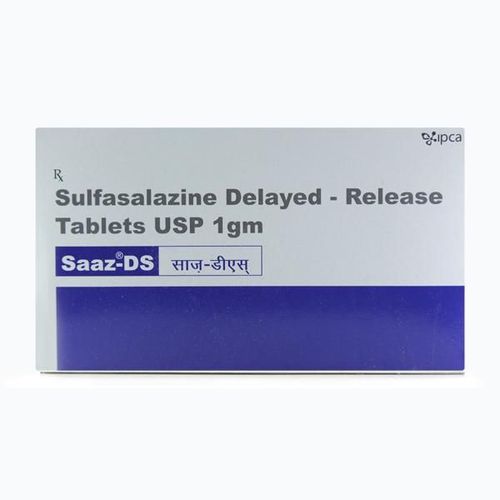
by Ipca Laboratories Ltd· 10S
SKU: 55209
You save ₹23 on this order
Inclusive of all taxes
Saaz DS Tablet 10'S is a prescri
rheumatoid arthritis, ulcerative colitis, and Crohn’s disease. It helps reduce
inflammation and relieve symptoms effectively.
Your doctor might want you to take certain blood, kidney and liver function
tests during the management. Drink enough fluids during this management to avoid
problems with kidney.
Before taking SAAZ DS TABLET inform your doctor if you have porphyria (a rare
blood pigment disorder), jaundice, kidney, liver, blood problems,
glucose-6-phosphate dehydrogenase deficiency, history of recurring chronic
infection, asthma, arthritis.
Inform your doctor if you are pregnant or breastfeeding. SAAZ DS TABLET is not
recommended for use in children below 2 years of age.
The most common side effects of taking SAAZ DS TABLET are indigestion,
heartburn, nausea, dizziness and headache. Consult your doctor if side effects
gets worse.
It is used to manage:
Often prescribed as an alternative to corticosteroids, which have more
severe long-term side effects
Saaz DS (Sulfasalazine) is a disease-modifying anti-rheumatic drug (DMARD) that
works primarily by targeting inflammation in the body, especially in the joints
and digestive tract
Swallow the tablet whole with a glass of water.
It can be taken with food or on an empty stomach, depending on how it affects your stomach.
It is often advised to take it after a meal if gastrointestinal discomfort occurs.
For Ulcerative Colitis:
For Crohn’s Disease:
No, Saaz DS (Sulfasalazine) should not be stopped suddenly without consulting a healthcare provider. Stopping the medication abruptly, especially for conditions like rheumatoid arthritis, ulcerative colitis, or Crohn's disease, can lead to a flare-up of symptoms or worsening of the condition.
Always talk to your doctor before stopping Saaz DS. They will guide you on the appropriate method to discontinue or adjust your medication, especially if you are experiencing side effects or if your condition has improved.
In some situations, if you’re no longer experiencing symptoms, your doctor may slowly taper the dosage to minimize the risk of flare-ups.
when prescribed by a healthcare provider and when used to manage chronic
conditions like rheumatoid arthritis, ulcerative colitis, or Crohn's
disease. However, long-term use should always be monitored closely due to
potential side effects and risks.
Monitoring for Long-Term Safety:
If you miss a dose, take it as soon as you remember.
If the next dose is near, skip the missed dose—do not take two doses at once to make up for the missed one.
Like all medicines, Saaz DS Tablet may cause certain side effects in some
individuals, although not everybody gets them.
!### Cough And Cold
!### Indigestion
!### Nausea And Vomiting
!### Pregnancy
Consult your doctorInform your doctor if you are pregnant or planning to have a baby before taking
SAAZ DS TABLET. Your doctor will decide whether to take it or not.
!### Breastfeeding
Consult your doctorAvoid breastfeeding while taking SAAZ DS TABLET as there have been reports of
diarrhea or blood in the stools in nursing babies. Consult your doctor before
taking it.
!### Driving and Using Machines
SafeSAAZ DS TABLET is unlikely to affect your ability to drive or use machines.
!### Kidney
Use with CautionSAAZ DS TABLET should be used with caution in patients with kidney disease.
Consult your doctor before taking. It’s important to regularly monitor serum
creatinine levels, glomerular filtration rate (GFR), and electrolyte
levels to ensure the kidneys are functioning properly and to adjust
medications accordingly.
!### Liver
Use with CautionSAAZ DS TABLET should be used with caution in patients with liver disease.
Consult your doctor before taking. Liver function tests (LFTs) should be
regularly monitored to assess whether the liver is handling medications
effectively.
!### Allergy
ContraindicatedDo not take SAAZ DS TABLET if you are allergic to Sulfasalazine, salicylates
(Ex. aspirin) or sulfonamides (type of antibiotic) or any other ingredients of
this medicine.
!### Lungs
Use with CautionSAAZ DS TABLET should be used with caution in patients with asthma. Consult your
doctor before taking.
!### Use In Pediatrics
Consult your doctorChildren and adolescents aged below 18 years must consult your doctor before
taking SAAZ DS TABLET. It is not recommended for use in children below 2 years
of age. Hence, consult your doctor for a suitable alternative.
!### Use In Geriatrics
Use with CautionSAAZ DS TABLET should be used with caution in elderly patients. Consult your
doctor before taking.
Before taking SAAZ DS TABLET, inform your doctor if you:
A healthy diet is essential for supporting the immune system and managing
symptoms associated with conditions treated by Saaz DS.
For Rheumatoid Arthritis:
For Ulcerative Colitis:
For Crohn’s Disease:
Exercise can significantly improve joint health, mobility, and overall physical
well-being. The key is to balance low-impact activities with those that enhance
flexibility and strength.
For Rheumatoid Arthritis:
For Ulcerative Colitis and Crohn’s Disease:
Certain lifestyle changes can enhance the effectiveness of Saaz DS and
improve quality of life.
Stress Management:
Regular Medical Check-ups:
Smoking and Alcohol:
Both Sulfasalazine and Methotrexate are immunosuppressive agents. When taken
together, there is an increased risk of bone marrow suppression, which can lead
to lower white blood cell counts, anemia, and thrombocytopenia.
Sulfasalazine can enhance the effects of Warfarin, increasing the risk of
bleeding. This is because Sulfasalazine can alter vitamin K metabolism, which is
critical for clotting.
Antacids and iron supplements can reduce the absor
gastrointestinal tract, making the medication less effective.
Both Sulfasalazine and NSAIDs can potentially cause gastric irritation or
ulcers, and taking them together can increase the risk of gastrointestinal
bleeding.
Azathioprine and Sulfasalazine are both immunosuppressants, and taking them
together may increase the risk of infections or bone marrow suppression.
| Drug | : | Sulfasalazine |
| Pharmacological Category | : | Anti-inflammatory |
| Therapeutic Indication | : | Ulcerative colitis, Crohn’s disease, Rheumatoid arthritis |
| Dosage Forms | : | Tablet |
A: Saaz DS (Sulfasalazine) is generally well-tolerated, but like any medication,
it can cause side effects. Some common side effects include: Gastrointestinal
issues: nausea, vomiting, abdominal pain, diarrhea, and flatulence (gas),
Headaches, Dizziness or lightheadedness, Loss of appetite.
A: Yes, nausea and vomiting are known side effects of Saaz DS, especially during
the initial stages of treatment or when the dosage is increased. These symptoms
usually lessen over time as the body adjusts to the medication. If nausea and
vomiting become severe or persistent, it’s essential to consult a doctor to
determine if dose adjustments or an alternative treatment are necessary.
A: Yes, headaches and dizziness are possible side effects of Saaz DS. These are
typically mild and may improve as your body adapts to the medication. However,
if these symptoms persist or worsen, or if they interfere with your daily
activities, it's advisable to consult your healthcare provider.
A: Yes, severe allergic reactions are possible, though rare. Signs of a serious
allergic reaction include:Rash or hives, Swelling of the face, lips, tongue, or
throat, Difficulty breathing and Severe dizziness.
If any of these symptoms occur, it is important to seek emergency medical
attention immediately, as they may indicate a serious reaction like anaphylaxis.
A: Yes, skin rashes are a known side effect of Saaz DS. Some individuals may
experience a mild rash, while others may have more significant skin reactions.
Photosensitivity (increased sensitivity to sunlight) is also possible, which may
make the skin more prone to sunburn. To manage this, it's important to use
sunscreen or protective clothing when exposed to sunlight.
A: Saaz DS (Sulfasalazine) can interact with painkillers like ibuprofen, and
caution is advised. Both Saaz DS and NSAIDs (nonsteroidal anti-inflammatory
drugs like ibuprofen) can increase the risk of gastrointestinal issues,
including ulcers or bleeding, and may cause kidney damage when used together.
Therefore, it’s important to consult your doctor before using them
simultaneously.
A: Methotrexate: Saaz DS and methotrexate are both immunosuppressive drugs, and
taking them together increases the risk of bone marrow suppression and liver
damage. Close monitoring of blood counts and liver function is recommended when
using these medications together.- Digoxin: There is no significant interaction
between Saaz DS and digoxin. However, it’s always advisable to monitor for any
unexpected symptoms or changes, especially related to kidney function since Saaz
DS can affect renal health.
A: There are no specific food restrictions while taking Saaz DS. However, some
patients find that their gastrointestinal symptoms (e.g., nausea, abdominal
pain) can be alleviated by taking the medication with food. It is also
recommended to avoid alcohol, as it can increase the risk of liver toxicity or
gastrointestinal irritation when combined with Saaz DS.
A: Yes, Saaz DS can be taken with other medications for arthritis, including
methotrexate and hydroxychloroquine. However, combining multiple
immunosuppressive drugs increases the risk of infections and bone marrow
suppression. Your healthcare provider will monitor your blood counts and kidney
function when combining these medications.
A: There is no direct interaction between Saaz DS and diabetes medications like
insulin or oral antidiabetic drugs (e.g., metformin). However, since Saaz DS can
affect kidney function, which is crucial for metabolism and clearance of
medications, it’s important to monitor renal function when taking it with
diabetes medications.
A: No, this is a prescri
A: It may take a few weeks to see full benefits. Follow your doctor’s guidance.
A: SAAZ DS TABLET is used to manage inflammation caused by rheumatoid arthritis
or inflammatory bowel disease (ulcerative colitis, Crohn’s disease). You must
talk to a doctor if you do not feel better or if you feel worse.
A: SAAZ DS TABLET is not recommended for use in children below 2 years of age.
It is not recommended if you have systemic-onset juvenile rheumatoid arthritis
(Stills disease). Consult your doctor before taking.
A: If you or anyone else accidentally take too much of SAAZ DS TABLET, consult
your doctor immediately or visit the nearby hospital. Symptoms of overdose are
nausea and vomiting.
A: SAAZ DS TABLET works by suppressing the overactivity of the immune system in
autoimmune diseases and blocks the chemical messengers that cause inflammation
(swelling).
A: Your doctor will take blood tests to check your blood, urine (for protein),
kidneys before you start management with SAAZ DS TABLET and regularly during
management.
A: Saaz DS (Sulfasalazine) is neither a painkiller nor a steroid. It is a
disease-modifying anti-rheumatic drug (DMARD) and an anti-inflammatory
medication. Sulfasalazine works by suppressing the immune system and reducing
inflammation in the body, particularly in the joints and gastrointestinal tract,
rather than directly relieving pain like traditional painkillers (e.g.,
acetaminophen or ibuprofen).


