
OTC22% OFF

₹5₹6.45
View DetailsLoading...
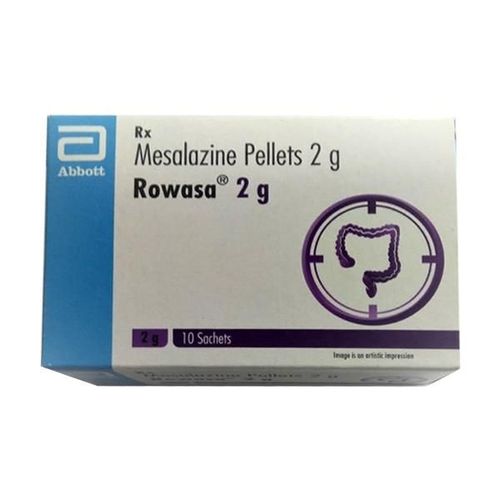
by Athena Drug Delivery Solutions Pvt.Ltd· 2GM
SKU: 915973
You save ₹16 on this order
Inclusive of all taxes
ROWASA PELLETS are an extended-release form of Mesalazine (also known as
Mesalamine), specially formulated to help manage chronic bowel conditions such
as ulcerative colitis and Crohn’s ileocolitis. These pellets provide targeted,
sustained action throughout the entire colon, helping to control symptoms and
support digestive health where it is most needed.
Take this medicine with food. Your dosage will be determined by your doctor
based on your specific condition, so follow their instructions carefully.
Continue using the medication for as long as your doctor advises. Stopping
management too soon may cause your symptoms to return or your condition to get
worse.
The most common side effects of this medicine include nausea, diarrhea, stomach
pain, headache, itching, flatulence, vomiting, rash, constipation, dizziness,
indigestion, and muscle pain. If these symptoms persist, worsen, or become
bothersome, inform your doctor. They may be able to suggest ways to manage or
reduce them. In rare cases, some individuals may experience a serious allergic
reaction that requires immediate medical attention. Seek medical help right away
if you notice signs such as swelling of the face, tongue, throat, or lips,
unusual bleeding or bruising, rash, fever, sore throat, or extreme tiredness.
Before taking this medication, let your doctor know if you have any kidney or
liver problems or if you have a blockage in your stomach. Your doctor will also
consider your age to determine if this medicine is right for you. If you are
pregnant or breastfeeding, consult your doctor before use. Be sure to inform
your doctor about all other medicines you are taking, as some drugs may interact
with this medication, altering how they work.
1)Reduces bowel inflammation: ROWASA Pellets contain mesalazine, which works
directly on the colon to reduce inflammation, helping relieve symptoms like
diarrhea, stomach pain, and bleeding in conditions such as ulcerative colitis
and Crohn’s ileocolitis.
2)Helps maintain long-term remission: These pellets not only manage active
symptoms but also helps to reduce flare-ups and maintain remission, reducing the
chance of disease recurrence with continued use.
3)Provides full-colon coverage: The extended-release formulation targets the
entire colon, making it especially effective for patients who require management
throughout the length of the large intestine.
4)Convenient once-daily dosing: ROWASA Pellets generally require only
once-daily administration, offering greater convenience compared to some other
mesalazine formulations that require multiple daily doses.
6)Well-tolerated with mild side effects: Most patients tolerate ROWASA
Pellets well, side effects tend to be mild, such as nausea, headache, or
abdominal discomfort, and serious reactions are rare.
ROWASA Pellets deliver mesalazine (mesalamine, 5-ASA) directly to the colon,
where it acts locally to reduce inflammation in the intestinal lining.
Their extended-release formulation ensures sustained drug levels throughout the
colon, maximizing their effectiveness in managing conditions like ulcerative
colitis and Crohn's ileocolitis.
The primary active ingredient is mesalazine (mesalamine, 5-ASA). It works by
inhibiting substances in the body that cause inflammation, supporting remission
and reducing the recurrence of symptoms.
Mesalazine’s anti-inflammatory action is believed to be mostly topical, directly
targeting the intestinal mucosa rather than acting systemically. It reduces
inflammation right at the site where it is most needed by blocking key
inflammatory pathways.
Mesalamine decreases the production of inflammatory mediators, leading to
less abdominal discomfort, diarrhea, and rectal bleeding in chronic bowel
disease patients.
In people with inflammatory bowel conditions, there is increased production of
inflammatory substances called prostaglandins and leukotrienes, which are
derived from arachidonic acid via cyclooxygenase and lipoxygenase pathways.
Mesalazine blocks these pathways, inhibiting both prostaglandin and leukotriene
synthesis, which helps control bowel irritation and swelling.
Mesalamine may also inhibit the activation of Nuclear Factor kappa B (NFkB), a
protein complex that regulates immune response and the production
of pro-inflammatory cytokines. By dampening these immune signals, mesalamine
helps control the chronic inflammation characteristic of ulcerative
colitis. There is also evidence that it engages PPAR gamma receptors in colonic
tissue, further regulating inflammation.
Like all medicines, Rowasa Pellets may cause certain side effects in some
individuals, although not everybody gets them.
!### Dizziness Or Drowsiness
!### Nausea And Vomiting
!### Pregnancy
Monitoring requiredRowasa Pellets should be used with caution during pregnancy and only if clearly
necessary. Limited human studies exist, but
the unborn baby. Your doctor will weigh the benefits and risks before
prescribing this medicine. Consult your doctor if you are pregnant or planning
to become pregnant. Consult your doctor before taking this medicine.
!### Breastfeeding
Monitoring requiredRowasa Pellets may pass into breast milk and could cause allergic reactions or
diarrhea in newborns. They should only be used by breastfeeding mothers if
clearly necessary and under medical supervision. If your baby develops diarrhea
while you are taking this medicine, discontinue breastfeeding and consult your
doctor immediately. Consult your doctor before taking this medication.
!### Driving and Using Machines
Use with CautionRowasa Pellets are unlikely to affect your ability to drive or operate heavy
machinery. You can safely perform such activities unless you feel unwell or
experience symptoms like dizziness.
!### Alcohol
Consult your doctorCaution is advised when consuming alcohol with Rowasa Pellets. Consult your
doctor before using alcohol while on this medication, as alcohol may aggravate
certain side effects.
!### Kidney
Consult your doctorRowasa Pellets should be used with caution in patients with kidney problems and
is not recommended for use in patients with severe kidney problems. Dosing
adjustments may be needed. Regular kidney function monitoring may be necessary.
Consult your doctor before taking this medication.
!### Liver
Use with CautionRowasa Pellets should be used with caution in patients with liver problems. Dose
adjustment may be required. Inform your doctor about any existing liver
conditions. Consult your doctor before taking this medication.
!### Allergy
ContraindicatedRowasa Pellets is not recommended for use if you are allergic to mesalazine or
sulfasalazine or any other salicylates or any other components of this medicine.
!### Lungs
Use with CautionRowasa Pellets should be used with caution in patients with pre-existing lung
disease or asthma as mesalazine may rarely worsen respiratory symptoms. Inform
your doctor if you have any history of lung disorders. Consult your doctor
before taking it.
!### Heart Disease
Use with CautionRowasa Pellets should be used with caution in patients with heart diseases.
Inform your doctor if you have any heart problems before taking this medicine.
!### Use In Pediatrics
Consult your doctorRowasa Pellets are not recommended for children under 6 years of age due to
insufficient safety and efficacy data in this age group. The use of Rowasa
Pellets in pediatric patients should only be considered if clearly advised by a
doctor, with special attention to dosing and monitoring. Always consult your
pediatrician before giving this medicine to children, as age, weight, and
disease severity may require individualized assessment and adjustments.
!### Use In Geriatrics
Use with CautionRowasa Pellets should be used with caution in elderly patients. Kidney and liver
function should be monitored regularly, as elderly patients may be more
susce
doctor before taking it.
Before taking ROWASA PELLETS, inform your doctor if you:
ROWASA PELLETS is not recommended for use if you:
| Aspect | Recommendation / Restriction | Notes & Rationale |
| Diet | No strict or specific dietary restrictions. | A balanced diet is advised for best management. |
| Dairy | Limit intake if you have difficulty digesting dairy. | Taking with milk can ease stomach irritation. |
| Spicy/Oily Foods | Prefer simple, easily digestible meals; avoid spicy or oily foods. | Can help minimize gastrointestinal discomfort. |
| Sugary Snacks/Drinks | Avoid excessive sugary foods/drinks. | Reduce additional digestive irritation. |
| Hydration | Stay well-hydrated. | Helps support digestive health. |
| Alcohol | Avoid or limit alcohol; it may worsen stomach/intestinal irritation and increase liver risks. | Especially important for those with liver issues. |
| Activity | No specific restrictions. | Maintain usual activity unless otherwise directed. |
| Meal Timing | Can be taken with or without food. | Taking with food may reduce stomach upset. |
| NSAIDs | Avoid NSAIDs like ibuprofen, aspirin. | These can worsen symptoms or interact adversely. |
Inform your physician if you are taking any of the following medicine before
taking Rowasa Pellets:
1.Azathioprine and 6-Mercaptopurine (immunosuppressants):Interaction: Rowasa Pellets can increase the risk of blood disorders when
used with these medications. Effects: Possible reduction in white blood
cell count, anemia, or bone marrow suppression. Management: Your doctor
may monitor your blood cell counts more closely, and dose adjustments may be
needed.
2.NSAIDs (such as ibuprofen, diclofenac, celecoxib):Interaction: Using Rowasa Pellets with NSAIDs may raise the risk of kidney
impairment. Effects: Increased chance of kidney damage or changes in
kidney function. Management: Avoid this combination if possible. If used
together, your doctor will likely monitor your kidney function regularly.
3.Proton Pump Inhibitors and H2 Blockers (such as omeprazole, pantoprazole,
lansoprazole, esomeprazole, nizatidine):Interaction: These medicines
can decrease the effectiveness of Rowasa Pellets by altering gastric pH.
Effects: Reduced anti-inflammatory action in the bowel.
Management: Your doctor may recommend avoiding this combination or will
monitor management effectiveness and may adjust your therapy as needed.
4.Live Vaccines (such as MMR, varicella):Interaction: Using Rowasa
Pellets with live vaccines can increase the risk of vaccine-related
complications. Effects: Higher chance of adverse effects or reduced
vaccine effectiveness. Management: Avoid salicylate (including
mesalazine) use for several weeks after vaccination, as advised by your doctor.
5.Other drugs that affect blood counts (such as methotrexate):Interaction: There is an increased risk for further suppression of blood
cells. Effects: Greater likelihood of developing anemia, increased risk
of infections or bleeding. Management: Frequent blood tests and dose
adjustments may be required.
6.Blood thinners (anticoagulants such as warfarin, heparin):Interaction: Rowasa Pellets may alter the effect of blood thinners,
potentially increasing bleeding risk. Effects: Greater susce
bruising, bleeding, or clotting problems. Management: Your doctor will
closely monitor your blood clotting parameters (such as INR) and may adjust
blood thinner dosages as necessary.
| Drug | : | Mesalazine (also known as Mesalamine) |
| Pharmacological Category | : | Aminosalicylates |
| Therapeutic Indication | : | Ulcerative colitis, Crohn’s ileocolitis |
| Dosage Forms | : | Tablets, Suppositories, Sachet, Granules, Powder, Pellet, Enema |
| Formulation | Convenience | Absor | ||
| ROWASA Pellets (Granules) | Convenient once-daily dosing; oral use; easily taken with or without food; do not crush or chew | Extended-release targets the full colon; starts in distal small bowel and continues throughout colon | Effective for extensive colitis, induction, and maintenance of remission | Patients needing full colon coverage and prefer oral therapy |
| Tablets (e.g., Asacol, Lialda, Pentasa) | Oral dosing; frequency varies (once to several times daily depending on formulation) | Some release in terminal ileum, others throughout colon; varies by brand and coating | Effective for extensive colitis; some require higher daily dose for better efficacy | Extensive or left-sided colitis; patients preferring oral route |
| Suppositories | Requires rectal administration, once daily or as prescribed | Local delivery to rectum and distal sigmoid colon (distal 20 cm) | Superior symptom relief for distal/rectal inflammation | Distal ulcerative colitis (proctitis), patients with rectal-only symptoms |
| Enemas | Rectal use, may be less convenient, especially long-term; typically used at bedtime | Targets rectum to splenic flexure (distal/left-sided colon, up to ~60 cm) | Rapid, strong effect for distal and left-sided disease; combined oral/rectal therapy more effective for widespread active disease | Left-sided UC or extensive UC as add-on to oral therapy for flares |
Conclusion:
A: Rowasa Pellets are primarily used to manage and manage ulcerative colitis, a
chronic inflammatory condition of the large intestine, and may also be
prescribed for Crohn’s ileocolitis. They help relieve symptoms like diarrhea,
stomach pain, and bleeding by reducing bowel inflammation.
A: Rowasa Pellets contain mesalazine (mesalamine), which acts as a topical
anti-inflammatory agent in the intestines. It works by inhibiting the production
of certain chemical substances, such as prostaglandins, that cause pain and
swelling in the bowel.
A: Take Rowasa Pellets exactly as your doctor prescribes. Swallow the pellets
whole with water; do not crush or chew them. They can be taken with or without
food, but taking with food may help reduce stomach discomfort. Continue the
medication for as long as recommended to keep symptoms in remission.
A: Common side effects may include nausea, diarrhea, stomach pain, headache,
gas, and vomiting. Most are mild and transient, but if they persist or worsen,
consult your doctor.
A: Rare but serious side effects include allergic reactions (swelling of face,
lips, tongue, or throat), unusual bleeding or bruising, severe rash, fever, sore
throat, excessive tiredness, or signs of kidney/liver problems. Seek medical
attention immediately if you experience any of these.
A: Rowasa Pellets are not recommended for children under 6 years of age. Safety
and effectiveness in younger children have not been established. Always consult
a pediatrician before using this medicine in children.
A: If you are pregnant or breastfeeding, consult your doctor before taking
Rowasa Pellets. They should only be used under medical supervision when clearly
needed.
A: Do not take Rowasa Pellets if you have allergies to mesalazine, salicylates
(like aspirin), or any ingredient in the pellets; severe kidney or liver
disease; or a history of allergic reactions to similar medicines. Always inform
your doctor about your full medical history.
A: Rowasa Pellets help control symptoms and maintain remission of ulcerative
colitis but do not cure the disease. Long-term adherence to management is
important to reduce flare-ups.
A: No specific dietary or activity restrictions, but maintaining a balanced diet
and staying hydrated is advised. Avoid alcohol and NSAIDs, as these may worsen
symptoms or interact with the medication. Always talk to your doctor about your
personal situation.
A: If you miss a dose, take it as soon as you remember. If it is almost time for
your next dose, skip the missed dose, do not double your next dose to make up
for it. Consult your doctor for advice on missed doses.
A: Yes, regular monitoring is important, especially to check kidney, liver,
blood, and lung health. This is particularly crucial for older adults or those
with existing health conditions to reduce potential complications.
A: The suitability of ROWASA Pellets depends on factors such as age and overall
health. It is not recommended for children under 6 years old. Always consult a
doctor to confirm whether ROWASA Pellets are appropriate for individual use,
including in pediatric and geriatric patients.
A: ROWASA Pellets provide a unique extended-release formulation that delivers
medicine consistently throughout the colon. This allows for usually fewer daily
doses, improving convenience and adherence compared to other forms like tablets,
suppositories, or enemas.


