
Rx19% OFF

₹48₹59
View DetailsLoading...
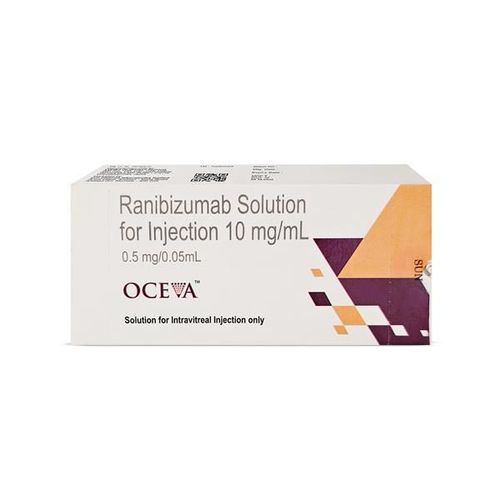
by Lupin Ltd· 1s
SKU: 1155821
You save ₹3240 on this order
Inclusive of all taxes
Oceva 10 mg/mL Injection contains r
administered by an ophthalmologist into the eye. It is used for retinal
conditions in which abnormal blood-vessel growth or leakage causes vision
impairment, including wet age-related macular degeneration, diabetic macular
oedema, macular oedema following retinal vein occlusion, proliferative diabetic
retinopathy, and certain forms of choroidal neovascularisation. It may also be
used in premature infants with retinopathy of prematurity when specifically
indicated by a specialist.
Oceva is intended for patients whose retinal condition has been confirmed by an
eye specialist and who require anti-VEGF therapy. The injection is not
self-administered; it is given by a trained ophthalmologist under sterile
conditions after appropriate eye preparation. The injection schedule depends on
the retinal condition, response to therapy, and the specialist's treatment plan.
Patients should attend scheduled eye examinations and monitoring visits, as
repeated injections may be required.
Before administration, inform the ophthalmologist about any active eye
infection, inflammation inside the eye, previous eye procedures, stroke or
cardiovascular history, pregnancy, breastfeeding, allergies, and all medicines
or supplements being used. The injection should not be administered when there
is an active infection in or around the eye or severe intraocular inflammation.
Temporary visual disturbances can occur after administration, so patients should
avoid driving or operating machinery until vision has returned to normal.
During pregnancy, Oceva should be used only when the ophthalmologist considers
that the expected benefit justifies potential fetal risk; women who could become
pregnant should discuss appropriate contrace
professional. Breastfeeding also requires specialist advice because human milk
exposure and effects on the infant are not fully established. Commonly reported
effects include eye pain or irritation, conjunctival bleeding, eye inflammation,
increased eye pressure, floaters, dry eye, redness, itching, and temporary
blurred vision. Persistent or worsening eye pain, redness, reduced vision,
increased sensitivity to light, or other significant visual changes require
prompt ophthalmic assessment.
If you miss a dose of Oceva 10mg/ml Injection, please consult your doctor.
!### Pregnancy
Consult your doctorR
benefit clearly outweighs the potential risk to the fetus. There are limited
clinical data on exposure during pregnancy.
Women who could become pregnant should use effective contrace
therapy and for at least 3 months after the last injection according to the
product information. Women planning pregnancy should discuss the timing of
treatment with their ophthalmologist.
!### Breastfeeding
ContraindicatedBreastfeeding is not recommended during r
information suggests that small amounts may pass into human milk, while the
effect on a breastfed infant is not established
!### Driving and Using Machines
Use with CautionTemporary blurred vision or other visual disturbances can occur after the
intravitreal injection. Do not drive, cycle, or operate machinery until vision
has returned to normal.
Arrange transportation home after the injection when appropriate, particularly
if both eyes are being managed or vision is significantly affected.
!### Alcohol
Consult your doctorNo specific clinically significant alcohol interaction with intravitreal
r
!### Kidney
Consult your doctorDose adjustment is generally not required in renal impairment.
!### Liver
Consult your doctorR
but no special dose adjustment is generally considered necessary based on
available product information.
!### Allergy
ContraindicatedDo not receive Oceva 10mg/ml Injection if you are allergic to any of its
components, if you have an infection in or around the eye, severe intraocular
inflammation (pain or redness in the eye)
!### Heart Disease
Monitoring requiredBecause VEGF inhibition may potentially affect vascular function, patients with
a history of stroke, transient ischemic attack, myocardial infarction, or other
serious cardiovascular disease should inform their ophthalmologist before
therapy.
Patients should be monitored according to their underlying cardiovascular risk
and the specific retinal condition. Seek urgent medical attention for symptoms
suggestive of a stroke or other major cardiovascular event, such as sudden
weakness, difficulty speaking, severe chest discomfort, or sudden shortness of
breath.
!### Use In Pediatrics
Consult your doctorUse in children and adolescents depends on the specific indication. For most
adult retinal indications, safety and efficacy in patients below 18 years have
not been established.
!### Use In Geriatrics
Consult your doctorNo specific dose adjustment is generally required in elderly patients. Older
adults may have multiple eye and cardiovascular conditions, so the
ophthalmologist should review their complete medical history and medicines.
Patients older than 75 years may have more limited clinical experience for some
indications, so individualized monitoring is appropriate.
Other Anti-VEGF Medicines
Verteporfin Photodynamic Therapy
Laser Photocoagulation
Thiazolidinediones
Medicines Affecting Bleeding
Oceva does not have a well-established direct interaction with blood thinners,
but patients taking medicines that affect bleeding should inform their
ophthalmologist because intravitreal injection itself can cause ocular bleeding.
Examples include:
Do not stop these medicines before an eye injection unless the prescribing
doctor specifically advises it.
| Drug | R |
| Pharmacological Category | vascular endothelial growth factor blocker |
| Therapeutic Indication | Eye conditions |
| Dosage Forms | Ophthalmic injection |
Oceva is supplied at a concentration of 10 mg/mL, but the amount injected into
the eye is much smaller than 1 mL. For the common adult r
mg, the corresponding volume is 0.05 mL. The exact dose depends on the
indication and specialist's prescri
This distinction is particularly useful on e-pharmacy product pages because
patients may otherwise assume that the entire 1 mL volume is injected.
Temporary blurred vision or visual disturbance can occur following intravitreal
administration. Patients should arrange appropriate transport when necessary and
avoid driving until vision has returned to normal.
Intravitreal r
(IOP) immediately after injection. Ophthalmologists may therefore check eye
pressure before and/or after administration, particularly in patients with
glaucoma or other risk factors.
Because the medicine is injected directly into the eye, sterile technique is
essential. Serious complications such as endophthalmitis and retinal detachment
are recognized risks of intravitreal injections. Patients should promptly report
increasing eye pain, redness, worsening vision, new floaters, or increased
sensitivity to light.
VEGF inhibition may be associated with a potential risk of arterial
thromboembolic events, including stroke and myocardial infarction. Patients with
a history of stroke, transient ischemic attack, or recent cardiovascular events
should ensure that their ophthalmologist has this information before treatment.
R
conditions. The ophthalmologist may repeat treatment based on visual acuity,
retinal findings, o
interval between injections is individualized according to the indication and
response.
A: Oceva 10 mg/mL Injection contains r
ophthalmologist for certain retinal conditions involving abnormal blood-vessel
growth or leakage, such as wet age-related macular degeneration, diabetic
macular oedema, and macular oedema associated with retinal vein occlusion.
A: Oceva is given as an intravitreal injection, me
into the vitreous cavity of the eye by a qualified ophthalmologist under sterile
conditions. It should never be self-administered.
A: The injection schedule depends on the retinal condition, visual response,
retinal findings, and the ophthalmologist's treatment plan. Some patients may
require repeated injections at regular intervals.
A: By reducing abnormal blood-vessel leakage and retinal swelling, r
may help stabilize or improve vision in appropriately selected patients. The
response varies according to the underlying eye condition.
A: Temporary blurred vision or other visual disturbances can occur after the
injection. Do not drive or operate machinery until your vision has returned to
normal.
A: Inform the ophthalmologist about any eye infection or inflammation, glaucoma,
previous eye procedures, history of stroke or heart problems, pregnancy or
breastfeeding, allergies, and all medicines or supplements you are taking.
A: Oceva should generally be avoided during pregnancy unless the expected
benefit clearly outweighs the potential risk. Women who could become pregnant
should discuss effective contrace
ophthalmologist.
A: Breastfeeding is generally not recommended during r
the effects of exposure on a breastfed infant are not sufficiently established.
Discuss the appropriate o
A: Seek urgent ophthalmic care for increasing eye pain, severe redness, sudden
reduction in vision, marked sensitivity to light, new or worsening floaters, or
other significant changes in vision, as these may indicate a serious eye
complication.
A: Store the injection under refrigerated conditions, generally at 2°C to 8°C,
protect it from light, and do not freeze it. Follow the manufacturer's storage
instructions until the medicine is administered.


