
Rx47% OFF

₹124₹234
View DetailsLoading...
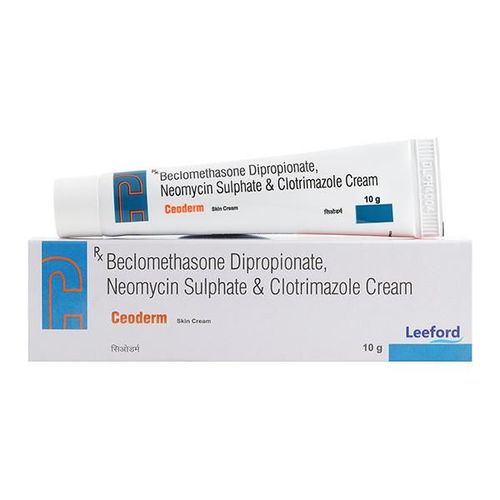
by Leeford Healthcare Ltd· 10GM
SKU: 850896
You save ₹33 on this order
Inclusive of all taxes
CEODERM CREAM is used to provide relief from skin infection, inflammation,
itching, irritation, redness and swelling. It contains a combination of
Beclomethasone, Clotrimazole and Neomycin.
Beclomethasone is a steroid medicine. It works by making your body not release
certain chemicals that causes inflammation and swelling. Clotrimazole and
neomycin stops the activity of microbes (fungi and bacteria) which when applied
at the infected site.
CEODERM CREAM is strictly for external use only. Apply a thin layer of CEODERM
CREAM on the affected skin areas. Avoid its contact with your eyes, mouth, ears,
nose, or any open wounds. Do not use CEODERM CREAM for more than 4 weeks without
consulting your doctor.
Before using CEODERM CREAM inform your doctor if you have any viral skin
infections, skin ulcers, spotty red rash around the mouth, acne, rosacea
(redness of skin) or itching of your anus (back passage) or genital areas as a
precaution. Consult your doctor before using CEODERM CREAM if you are pregnant
or breastfeeding.
The most common side effects of applying CEODERM CREAM are skin thinning and
application site irritation and burning sensation. Consult your doctor if this
side effect trouble you.
CEODERM CREAM contains three medicines, namely beclomethasone, clotrimazole and
neomycin. Beclomethasone is a steroid medicine which stops your body from
producing certain chemicals that causes inflammation and swelling, while
parallelly making your body release chemicals that heals inflammation.
Clotrimazole is an antifungal medication which works by inhibiting the synthesis
of ergosterol, an essential component of fungal cell membranes. Without
ergosterol, the cell membranes become weakened and leaky, leading to fungal cell
damage.
Neomycinis an antibiotic which stops protein synthesis in bacteria which is
necessary for it to survive. As a result, it disrupts bacterial growth and
replication and controls the spread of bacterial infection.
Apply a small amount of CEODERM CREAM into the affected skin areas or directed
by the physician. It is for topical use only. Wash your hands before and
after application.
Your doctor will decide the correct dose and duration of therapy for you
depending upon your age, body weight and health condition. Do not stop using or
overuse CEODERM CREAM without consulting your doctor.
Avoid contact of CEODERM CREAM with your eyes, mouth, ears, nose or with open
wounds. In case of accidental contact, rinse with plenty of water.
Stop using CEODERM CREAM and consult your doctor immediately if you experience
any of the following:
!### Application Site Reactions
Gently cleanse the irritated area with mild, fragrance-free soap and lukewarm
water to remove any irritants or debris. Avoid using hot water, harsh soaps, or
scrubbing vigorously, as these can further irritate the skin. After cleansing,
gently pat the skin dry with a soft towel, avoiding rubbing. Next, apply a
soothing moisturizer or emollient cream to help hydrate and protect the skin
barrier. Look for products containing ingredients like aloe vera, oatmeal, or
ceramides, which have calming and moisturizing properties. Additionally,
consider avoiding known triggers or irritants that may exacerbate the skin
irritation, such as harsh chemicals, fragrances, or rough fabrics. Opt for
loose-fitting, breathable clothing made from natural fibers like cotton to
minimize further irritation. If the skin irritation persists, worsens, or is
accomp
infection, it's essential to seek medical advice from a doctor.
!### Pregnancy
Consult your doctorThere is inadequate information regarding the safety of CEODERM CREAM during
pregnancy. Hence, CEODERM CREAM should be used in pregnant women only if it is
considered necessary by the doctor. Therefore, consult your doctor before using
it.
!### Breastfeeding
Consult your doctorCEODERM CREAM can be used in breastfeeding women if required. However, consult
your doctor before using it.
!### Driving and Using Machines
SafeCEODERM CREAM is unlikely to affect your ability to drive or use machines.
!### Allergy
ContraindicatedDo not use CEODERM CREAM if you are allergic to beclomethasone, clotrimazole or
neomycin.
!### Use In Pediatrics
Consult your doctorCEODERM CREAM should be used in children and adolescents (aged 12 year or older)
only if prescribed by the physician. There is no proper study information
regarding the use of CEODERM CREAM in children aged below 12 years. Therefore,
consult your doctor before using it.
!### Use In Geriatrics
Use with CautionCEODERM CREAM should be used with caution in elderly patients. Therefore,
consult your doctor before using it.
CEODERM CREAM is not recommended for use if you:
A. Drug - Drug interactions
Before using CEODERM CREAM, inform your doctor if you are using any of the
following medicines including prescri
supplements.
Overdosage
CEODERM CREAM is for external use only. Therefore, it is unlikely to cause any
overdosage. However, if you applied too much of this medicine, rinse with water.
Alternatively, if you or anyone else accidentally swallowed CEODERM CREAM,
consult your doctor for advice or visit the nearby hospital.
| Drug | : | Beclomethasone, Clotrimazole, Neomycin |
| Pharmacological Category | : | Corticosteroids, Azole Antifungals, Aminoglycosides |
| Therapeutic Indication | : | Skin infection and Inflammation |
| Dosage Forms | : | Creams, Ointment, Lotion, dusting powder, Ear drops, Skin cream |
A: CEODERM CREAM is used to provide relief from skin infection, inflammation,
itching, irritation, redness and swelling associated with certain skin problems,
such as psoriasis and eczema (atopic dermatitis).
A: CEODERM CREAM contains a combination of Beclomethasone, Clotrimazole and
Neomycin. Beclomethasone is a steroid medicine. It works by making your body not
release certain chemicals that causes inflammation and swelling. Clotrimazole
and neomycin stops the activity of microbes (fungi and bacteria) which when
applied at the infected site. Together, they provide relief from skin infection,
irritation and inflammation.
A: Apply a small amount of CEODERM CREAM into the affected skin areas or
directed by the physician. It is for topical use only. Wash your hands before
and after application.
A: CEODERM CREAM is for topical use only. Avoid contact of CEODERM CREAM with
your eyes, mouth, ears, nose or with open wounds. Wash your hands before and
after application. Before using CEODERM CREAM inform your doctor if you have
acne, or any viral skin infections or skin ulcers or sores. Consult your doctor
before using CEODERM CREAM if you are pregnant or breastfeeding.
A: CEODERM CREAM is safe at doses prescribed by the physician. When in some
individuals it may cause skin irritation and discomfort. Consult your doctor if
this bothers you.
A: The most common side effects of applying CEODERM CREAM are skin thinning and
application site irritation or burning sensation. Consult your doctor if this
side effect trouble you.
A: It may around take 2-4 weeks for you to heal. However, you might see an
improvement in your condition within the first week of the therapy. The recovery
period may differ from person to person based on severity of skin condition.
A: Avoid using any other topical medicines along with CEODERM CREAM without
consulting your doctor.
A: CEODERM CREAM should be used in children and adolescents (aged 12 year or
older) only if prescribed by the physician. There is no proper study information
regarding the use of CEODERM CREAM in children aged below 12 years. Therefore,
consult your doctor before using it.
A: There is inadequate information regarding the safety of CEODERM CREAM during
pregnancy. Hence, CEODERM CREAM should be used in pregnant women only if it is
considered necessary by the doctor. Therefore, consult your doctor before using
it.
A: Yes. CEODERM CREAM is used to reduce the redness and itchiness associated
with certain skin problems, such as psoriasis and eczema (atopic dermatitis).
A: No, it's important not to discontinue CEODERM CREAM and to finish the entire
course of therapy, even if you start feeling better. Improvement in symptoms may
occur before the skin infection is fully managed.


